

Tennis Alternatives for Players: 2026 Guide
Table of Contents
- Why Tennis Players Seek Alternatives
- Padel: The Wall Game That Rewards Tennis Skill
- Pickleball: The Fast-Growing Alternative for Competitive Players. But is it safe?
- High-Intensity Court Sports: Squash, Racquetball, and Touchtennis
- Comparing Costs and Injury Risk Across Alternatives
- Conclusion: Finding Your Next Court
- Frequently Asked Questions
Last Updated: September 16, 2026
Why Tennis Players Seek Alternatives
We all know tennis is the greatest sport in the multiverse. But not everyone can play, so we here at Tennis Freak Gear are mapping out the best tennis alternatives for players who still want competition, sweat, and a reason to buy shirts and gear. (Psst! We've got that part covered).
Tennis Appeal and What Comes Next
The old country club aesthetic is a relic of the past that isn't keeping up with the pace of modern tennis. What's replacing it is dark graphics, aggressive typography, and zero country-club politeness. And TFG is riding this maverick wave into the future of modern sports apparel! Be one of us. ☠️
Padel: The Wall Game That Rewards Tennis Skill
Padel is played on an enclosed court roughly a third the size of a tennis court, with solid paddles, underhand serves, and glass walls you can play the ball off. Tennis players pick it up faster than almost anyone else because groundstrokes and net instincts transfer directly.
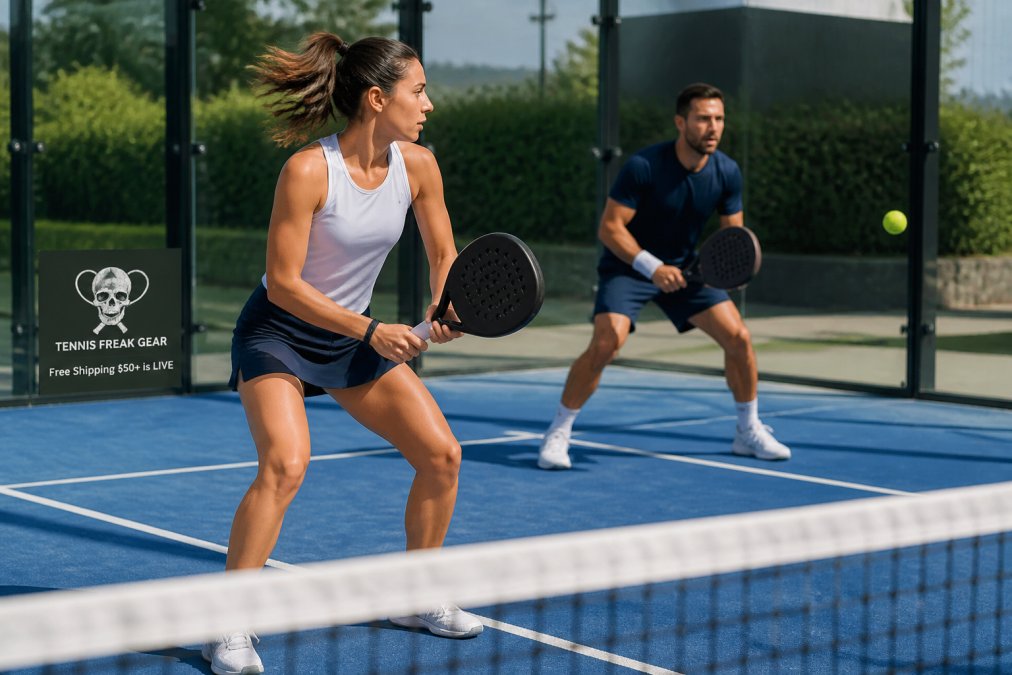
Padel vs Tennis: Court, Gear, and Game Pace
Padel courts measure 10 by 20 meters, about half the length of a tennis court. The ball moves slower, rallies last longer, and the wall play adds a dimension tennis never teaches you. A padel paddle weighs less than a tennis racket and costs less to replace.
Pickleball: The Fast-Growing Alternative for Competitive Players. But is it safe?
Pickleball is sold as the closest thing to a drop-in replacement for tennis at the recreational level. And it is booming. Maybe you've seen the courts at your club shrinking to make way for the pickle revolution? What they're getting is a smaller court, lighter paddle, plastic ball, and a pace that lets beginners rally within an hour. It has spread through parks departments and community centers faster than any racquet sport in recent memory. But is Pickleball safer than tennis? Maybe not. See the FAQ at the bottom of this article to read about the surprising injury that Pubmed says is increasing “at an alarming rate.”
High-Intensity Court Sports: Squash, Racquetball, and Touchtennis
These three are not the trendy picks, but they are the most underrated options for a tennis player who wants a real physical challenge without the pickleball learning curve. Each plays differently and suits a different kind of player.
Squash: The Endurance Test
Squash is played indoors in a four-walled box roughly 21 feet wide and 32 feet long, with a tin at the front bottom that kills any shot hit too low. The ball is small, dense, and slow off the wall, so it dies in the corners and forces you to retrieve shots a tennis player would never chase: constant movement, constant recovery, no free points.
Racquetball: The Fast-Twitch Option
Racquetball uses the same basic box as squash but a livelier, larger ball and a shorter racket. The ball bounces more, rallies are faster, and the sport rewards raw athleticism and quick hands over patience. Where squash is a chess match, racquetball is a sprint.
Touchtennis: The Bridge Sport
Touchtennis is the odd one out and the most useful for a specific player: the one coming back from injury, short on time, or wanting a low-impact version of tennis that still feels like tennis. It is played on a smaller court with a short racket and a foam or low-compression ball, and you can learn it in a single session.
Which One Fits You
- You want to suffer for cardio and love a tactical grind. Squash.
- You want fast rallies, aggressive shots, and a pickup game tonight. Racquetball.
- You want the closest thing to tennis for competition and movement? Padel.
Sport |
Court Size |
Gear Cost |
Injury Risk |
Best For |
|---|---|---|---|---|
Padel |
~1/3 tennis court |
Moderate |
Low |
Tennis players who want wall play |
Pickleball |
~1/4 tennis court |
Low |
Low |
Social players, quick learning |
Squash |
Indoor box |
Moderate |
Moderate |
Cardio-focused competitors |
Racquetball |
Indoor box |
Moderate |
Moderate |
Athletic, fast-twitch players |
Touchtennis |
Small court |
Low |
Low |
Beginners, casual hitting |
🎁 Free Shipping $50+ is LIVE, so if you are upgrading to a dramatic court wardrobe, you can do it now without paying for shipping - with a $50+ purchase from our site.
Comparing Costs and Injury Risk Across Alternatives
Most tennis alternatives guides stop at "pickleball is cheap, squash is hard on your knees" and call it a comparison. That’s not useful if you are deciding the fate of your body. Here is the breakdown that actually matters, split into recurring cost and joint-by-joint load.
The Recurring Cost Picture
Entry cost is a one-time number. Recurring cost decides whether you stick with a sport for three years or quit in month four. The pattern across all five alternatives:
- Court access. Pickleball and touchtennis are the outliers because parks departments and community centers frequently offer free or low-cost open play, and many rec centers fold court time into a membership. Padel almost always requires a paid court reservation because the enclosed courts are expensive to build and operate, so the rental, not the paddle, is the real recurring expense. Squash and racquetball sit indoors, which means facility dues or per-hour court fees every session.
- Consumables. Pickleball and padel balls crack, go soft, or lose bounce faster than tennis balls because the hollow polymer shells fatigue, so budget to replace them more often. Squash balls last longer but cost more per ball. Touchtennis foam and low-compression balls are the cheapest consumable here.
- Gear replacement cycle. Padel and pickleball paddles have a shorter useful life than a tennis racket because the core compresses and the surface grit wears down. Most players replace a paddle every one to two years of regular play, versus 5+ years for a tennis racket.
- Stringing and maintenance. This is where tennis quietly loses. Tennis players pay for restringing multiple times a year. Padel, pickleball, and touchtennis paddles have no strings. Squash and racquetball restring far less often than tennis.
Injury Risk, Joint by Joint
This is the comparison almost no ranking article does, and the one tennis players need most because they arrive with pre-loaded wear patterns.
Mapping Your Tennis Skills to the Right Alternative
Cost and injury are only half the decision. The other half is which of your existing tennis skills actually transfer:
- Strong net player and volleyer. Padel is your best fit. The wall game rewards hands, reflexes, and net positioning more than any other sport here.
- Baseline grinder with heavy topspin. Squash is the closest match because the deep-court rally and corner-to-corner movement reward the same conditioning and patience.
- Big server who wins free points. None of these sports reward the serve the way tennis does. Pickleball is closest because the serve starts the point but the third-shot drop and dink battle decide it. Expect to lose your serve advantage and rebuild around touch.
- Fast-twitch athlete who likes to attack. Racquetball rewards exactly that profile, with quick bursts and aggressive kill shots.
- Player coming back from injury or short on time. Touchtennis is the lowest-impact, fastest-to-learn option and the easiest to fit into a 45-minute window.
Finding a Local Game
A sport you can't find a partner for is a sport you will quit. The practical paths, in order of how quickly they get you on a court:
- Parks and recreation departments. The fastest route for pickleball and touchtennis because many run drop-in sessions with no membership required.
- Community centers and YMCAs. The most reliable route for squash and racquetball because the courts are already there and leagues are usually organized in-house.
- Padel-specific clubs. Padel is club-driven, so the club is the community. Most run beginner clinics and a ladder or league that matches you with players at your level within a few weeks.
- Apps and local leagues. Pickleball and padel both have active recreational ladders in most metros, and signing up is the fastest way to go from hitting with a friend to playing real matches.
- Ask at the pro shop. Whoever sells the paddles knows who runs the leagues. That conversation is worth more than an hour of searching online.
Conclusion: Finding Your Next Court
The right alternative depends on what you actually want from the switch. If you want a sport that rewards your existing strokes, start with padel. If you want the fastest path to a competitive match, pickleball is the answer. If you want to suffer for cardio, squash and racquetball deliver.
Frequently Asked Questions
What do people play instead of tennis?
Players looking for alternatives to tennis can try padel, pickleball, squash, racquetball, or touchtennis. Padel combines tennis strokes with wall play on a smaller court. Pickleball offers a slower pace and shorter rallies. Squash and racquetball provide high-intensity indoor workouts. Each sport has different physical demands, equipment, and skill transfer from tennis, so the best choice depends on your fitness level, court access, and whether you want a social or competitive environment.
Is Pickleball without injury risk?
Pickleball has exploded onto the scene, but the notion that this is an injury-free game is in question. As reported by Pubmed: "...Pickleball-related eye injuries have increased at an alarming rate over the past 4 years." https://pubmed.ncbi.nlm.nih.gov/41100112/
How does padel compare to traditional tennis?
Padel uses a smaller enclosed court with glass walls, a solid paddle, and a low-compression ball. You can play off the walls, which adds a dimension tennis does not have. Serves are underhand, and the game emphasizes court sense, volleying, and wall play over baseline strategy. The physical exertion is moderate, with less joint impact than tennis. Skill transfer from tennis is strong for ground strokes and net play, but the eastern grip and racket weight differ, so expect an adjustment period.
What is the appeal of niche, edgy tennis apparel brands?
Niche tennis clothing brands attract players who want to express intensity and individuality beyond generic sports apparel. These brands focus on intricate graphic design, dark aesthetics, and high print fidelity that holds up after repeated washing. For dedicated players, the appeal is wearing something that reflects their commitment to the game without looking like everyone else on court. The quality of the print and the fit matter as much as the design, especially for players who treat tennis as a lifestyle rather than a casual hobby.